London Stock Exchange Bell

A symbol of heritage, a signal of ambition.

Overview

For generations, the ringing of the bell was part of daily life at the London Stock Exchange. It marked the rhythm of the trading day and became synonymous with activity on the Exchange floor.

As markets evolved, so too did the Exchange. The reforms of Big Bang in 1986 accelerated the transition from open-outcry trading to electronic markets, transforming the way business was conducted. The trading floor disappeared and, over time, the bell faded into history.

Forty years after Big Bang, the London Stock Exchange bell has returned. Not simply to reflect on the progress of the last four decades, but to celebrate the next chapter in the evolution of our markets.

The process is an ancient one.For every casting, a mould is made.The manufacturing process in the foundry is just typicalof processes used for making small bells.A pattern identical to the castingis invested in sand.On the outside, to give the outside shape of the belland the inside, to give the inside shape of the belland the mould is split in such a way that the pattern can be removed.When the two parts of the mould are reassembleda void is createdand it is into that void,that the liquid metal is poured.We've melted the bronzeto a temperature of a little over 1100°C.Bell metal is so called because it has aparticularly high tin contentand that gives the metal a hardness and a brittleness,which of course is why bells ring.When that cools, it solidifies.The mould is taken apart and then the casting is revealed.It's very simple and it's been used for centuries.The Stock Exchange bell was one of the last bellsthat was cast at our Whitechapel Road Foundry.If they tap the bell into there,that gives them the readings.We're working in hundredths of a semitone.That's that's how you know what the...That's the strobe Ma'am, yeah.There's a lot of history surrounding the areawhere this bell was cast.The metal would have been poured very roughly six feetfrom where the metal was pouredinto the mould for Big Ben.The company never actually closed.It was the foundry that closedand I'm still in touchwith a number of people who we employed thereand the finishing of the bellis undertaken by our handbell foreman.I'm responsible for turning it, tuning it,putting a handle on it,putting internal fittings in it and making sure that it sounds beautiful and looks beautiful.I'm doing that with this honing tool,which is a tool that I use,I sharpen and then I bluntand I know it sounds crazy,but it takes off the minutest parts of metalbecause I want to get this as smooth as possiblebecause the easier I make that, the easier the polish and finish will be.You know, it comes out of a mould.It's a sand mould,so it would have been rough.I mean, it's burnt, it's charred.It's...and then you cut away into that and thenthat's when the magic comes.Beautiful.This is metal. It's hard.Things can go wrong all the time.If you do the process that you know,that has been done for over 500 years,then the chances are that it won't go wrong.This bell herewould have been cast roughly in the same areaas where the pit was that cast the Liberty Bell,so that,that's its wee brother.Every single bell you make is different.You want a bell to sound unique in itself,but beautiful.Harmonically beautiful.I've always said, every bell you make,there’s a part of you in it.A bit of love, a bit of affection.There's definitely something about a bell castat Whitechapel Bell Foundrythat makes it unique.It's the magic and the love and the passion that went into it.You're gonna make me cry, stop.But it's true.The skill to get to that.Forget about me.The guys before, that made it.That foundry was just magical.So that's part of it.I feel really proud.The fact that it's going down to London,it's going to hang.It's going to become a big part of people's lives,and I'm a part of thatand that makes me really, really proud.My part,after the bell was polished and finished,I need to transfer that piece of artworkto there.I'm using carbon papers as a means to justtransfer the rough line through to the surface.I use a fine,0.3 pencil, which I keep sharpenedeven more to make a finer detail.It doesn't go in straight lines,it tries to follow the curve,so there is a certain amount of correctionfrom that piece, to that piece, to marry it up.Back in the day they'd have used parchment and beeswax.So, this is just a 21st century way of doing somethingwhich is centuries old.The first section was the main text.The chisels that I'm using are,they're a high-speed, steel chisel.You have to be very careful,particularly in small areas.It's all done.I've gone around it and made sure that there'sno lumps, bumps or anything like that,that I need to get rid ofand it looks nice.Then I moved on to the crest itself.With any engraving, it's notthe metal that you remove which is important,it's the metal that you leave.Around the crown,that area needed to be left raised.That was a tricky bit.Out of ten, ten-and-a-half, 11.It's tricky.What I'm doing now, with the 'graver,We’re moving a bit more metal.Slowly, slowly.One of the joysof being a hand engraver is that you will slip.The real skill, then,is getting yourself out of the muck.You need to leave enough metal in the clawsbecause those claws might look a bit large.If you make those any smaller,then we'll lose it completely.I need to get enough depth around that areato be able to actually fill the void with resin.The cuttingon this lettering is completely differentto the other side becausethis is not going to be filledand so the background textureof the engraving needs to be flat and bright.Where the serifs are,you need to be able to see a nice, bright, V cut.It's really important that that looks right.OK, so there is a problem.This mark has revealed itself, I didn't see it before.It is only a very small mark, but because there'snothing else around it,it's stuck out pretty loud to me.So that's got to come out.So the mark has goneand what I need to do nowis to polish out the marks that I've just put in there.If it's a nice shine and it looks about the sameas what Steve's done, then I'm happy with that.Next part is to fill the engraving with resin.When the resin starts to puddle,that’s when you start to see detail in the engraving.Because anything that's not quite right,it sticks out like a sore thumb.It's just a case of pushing the resin around.See that's too much in there.So that's gonna have to come out.So that's about it.That's one third of the crest that's filled now.Paul, hello.Good to see you.Good to see you.Here's one I did earlier.That is exactly as I hoped it would be.Only it's so much better.Paul, that is wonderful.Donated by Michael Findlay, Chair of the London Stock Exchange, 2026.Oh, they're good, aren't they?Down the bottom of your nose.That's it.That detail is exquisite.Every single aspect of that coat of armshas been reproduced.Thank you.Wonderful.Absolutely wonderful.I suppose the phrase,the devil is in the detail.I'm,I'm pleased with it.It's been a nice project to be involved in.It's kind of, a nice thing to say thatmaybe one day I'll see it,or my grandkids will see itand they'll be able to say,oh yeah, my granddad did that.I so hope this is what you're expecting.We're very excited.This is, this is definitely a moment.This is it.This is it.Wow.That is phenomenal. That's brilliant.Look at that. It's absolutely beautiful.First of all, in terms of how it visually,it looks, it looks absolutely fantasticand I'm just amazed at the sort of craftsmanshipthat's gone into making it.It's fabulous.Absolutely fabulous.The engraving is fantasticand they've spelt my name correctly.And this is beautiful as well.I think it's amazing.I think it's amazing on so many levels.It's,it's dramaticand quite emotionallyit feels like part of our history alreadyand I only saw it ten minutes ago.Can l give you a hug?Of course you can.Because this is just amazing.It's an emotional moment.So shall we just see what happens?See how that goes.It's been an idea for a long timebut to realise itand to bring the sound back to the Exchangeand to do so, so close to the 40th anniversary of Big Bang,when so many people actually feel that theenergy and the noise of the Exchangesort of dissipated across the City,to be able to metaphorically bring that back,on behalf of all of those people who make our markets work,is a wonderful thing to do.

Leadership views

Voices behind the Bell


Markets are sometimes seen as abstract, defined by numbers and screens. But at their heart they are about people: founders with ideas, companies with ambitions and investors willing to back them. Big Bang transformed our markets, and as trading moved from the floor to screens, the Exchange itself inevitably changed too. I hope this bell can recapture some of the vibrancy and sense of community that once filled the Exchange floor, while celebrating the optimism and enterprise of the people shaping our market today.

Julia Hoggett

CEO, London Stock Exchange


For generations, the bell marked moments of ambition, achievement and renewal at the London Stock Exchange. My hope is that this bell comes to represent not only our rich history, but also the optimism, innovation and entrepreneurial spirit that will define the next chapter of London's capital markets.



Michael Findlay

Chair of London Stock Exchange plc

The history of the Bell

Cast alongside British icons
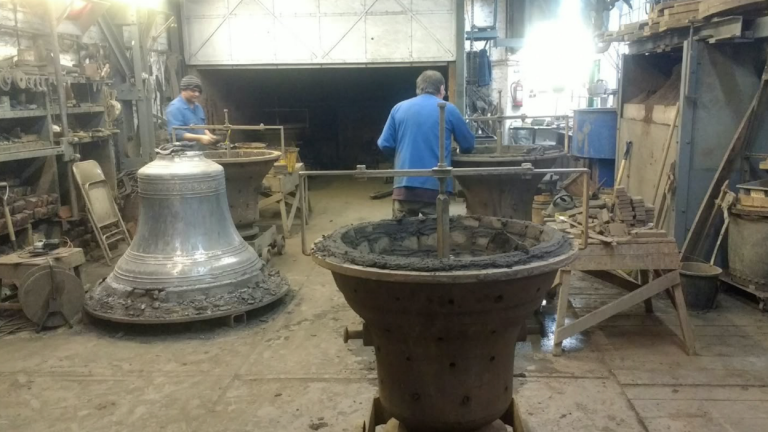
Bell being manufactured inside the foundry where the London Stock Exchange bell was cast.

The London Stock Exchange bell was cast at the same foundry that created Big Ben and the Bow Bells, placing it among some of the world's most iconic bells and centuries of bell-making heritage.

One of the last from Whitechapel
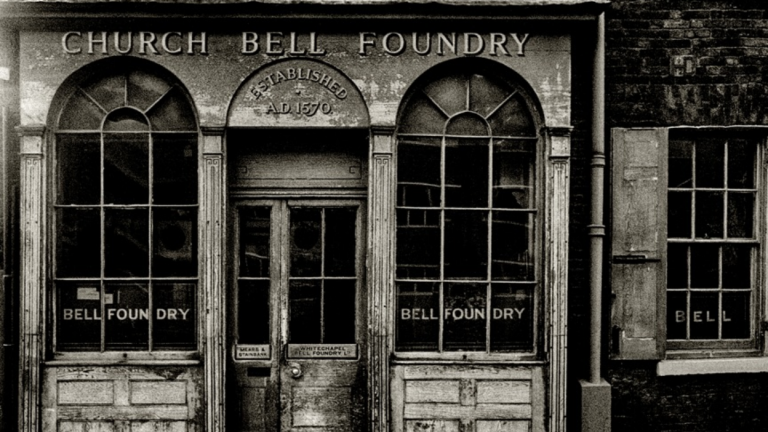
Historic entrance of the Whitechapel Bell Foundry in London.

Cast at the historic Whitechapel Bell Foundry, the London Stock Exchange bell is among the last bells produced before the foundry left its Whitechapel Road home in 2017, bringing to a close more than 450 years of continuous bell-making history.

A voice all its own
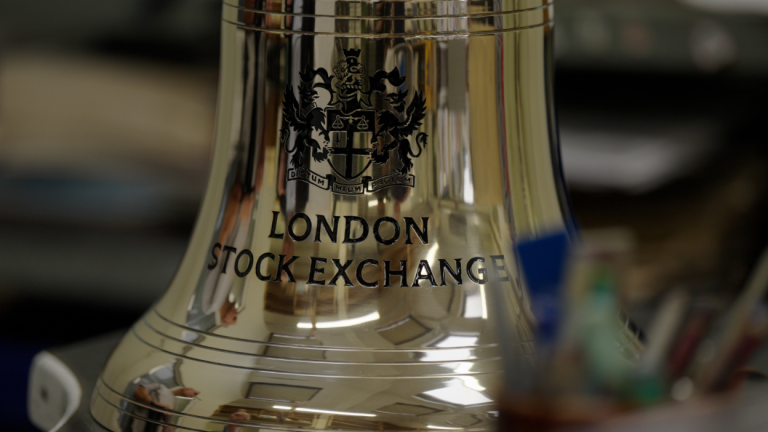
Close-up of the London Stock Exchange bell showing the engraved logo and lettering.

A bell produces far more than a single note. When struck, it creates a blend of harmonics that combine to form its distinctive voice. Expert craftsmen at the Whitechapel Bell Foundry carefully tuned the London Stock Exchange bell to balance these tones, creating the rich, resonant sound that today marks some of the Exchange's most significant moments.